
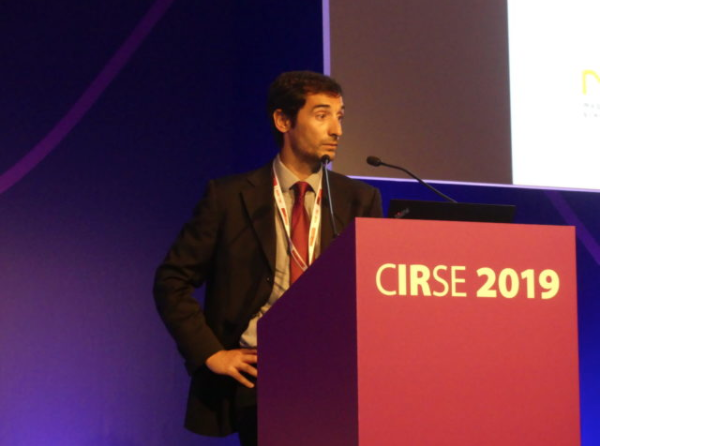
Prostate artery embolization (PAE) may become the standard of care procedure for the management of symptomatic benign prostatic hyperplasia (BPH), proposed Tiago Bilhim (CHULC, Saint Louis Hospital, Lisbon, Portugal), due to “good clinical results” presented at the 2019 annual meeting of the Cardiovascular and Radiological Society of Europe (CIRSE; 7–11 September, Barcelona, Spain).

The investigators set out to evaluate the outcome of PAE for symptomatic BPH patients with moderate to severe lower urinary tract symptoms (LUTS). The single-centre, retrospective study examined data on 1,550 patients, prospectively-collected between March 2009 and February 2019.
“Subjective and objective parameters were assessed”, Bilhim said. The International Prostate Symptom Score (IPSS), quality of life (QoL) score, and international index of erectile function (IIEF-5) were categorised as subjective measures, whilst the investigators also calculated changes in prostate volume (PV) using trans-rectal ultrasound, peak urinary flowrate (Qmax), post-void urinary residual (PVR), and prostate specific antigen (PSA) concentration. All of these were assessed before PAE, and one, six, and 12 months after PAE, then yearly for up to 10 years.